
Knowledge
How to Choose the Best Espresso Coffee Machine for Your Café
> The best espresso machine for your café balances performance, durability, and cost-efficiency. Key factors like pressure consistency, thermal stability, and automation are crucial to ensuring high-quality coffee in a busy environment.
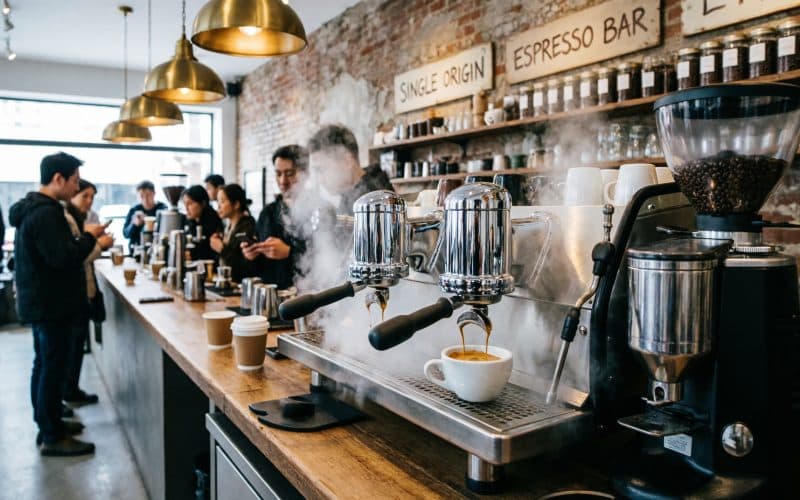
You may also find these guides helpful:
Share your love
Key Takeaways
When it comes to choosing the right espresso coffee machine for your café, technical specifications often outweigh brand names or flashy features. As a café owner or hotel F&B director, you need to consider various factors such as the machine’s ability to handle high-volume service, the quality of its coffee extraction, and the overall return on investment (ROI). Below, we break down the essential technical aspects of espresso machines to help you make an informed decision that supports your business goals.
- Focus on pressure, temperature stability, and boiler type for best performance.
- Choose a machine with a high-duty cycle for consistent service during peak hours.
- Consider the cost vs. ROI to ensure profitability over the machine’s lifespan.
- Evaluate automation features like volumetric dosing and PID control for consistent quality.
- Ensure the machine supports maintenance ease to minimize downtime.
What is the Best Espresso Coffee Machine for a Café?
The best espresso machine for café is one that delivers consistently high-quality espresso shots while maintaining long-term reliability under high-demand conditions. Factors such as pressure control, temperature stability, boiler size, and overall machine durability are the cornerstones of any professional espresso machine. Additionally, a machine with advanced features like PID (Proportional-Integral-Derivative) control for precise temperature management and automatic dosing for consistency can provide significant operational benefits.
How Does an Espresso Coffee Machine Work?
At its core, an espresso machine forces hot water through finely-ground coffee at high pressure to extract a concentrated shot of coffee. This process requires a stable environment with consistent pressure and temperature throughout the brewing cycle. Here’s a breakdown of the major components involved:
- **Boiler:** The boiler heats the water. Machines often feature dual boilers or heat exchange systems for better temperature stability during high-volume use.
- **Pump:** The pump generates the pressure required for espresso extraction. A rotary pump is typically preferred for commercial environments due to its quieter operation and better durability.
- **Group Head:** The group head is where the portafilter is attached. It needs to maintain temperature stability, which is why many machines use a thermally stable group head or a pre-infusion system.
- **PID Control:** A PID controller helps manage the temperature of the water more precisely, offering more consistent shots.
Pressure Consistency
One of the most critical features of an espresso machine is the pressure control system. Most espresso machines operate at a standard pressure of around 9 bars (130 psi). However, it is essential to maintain this pressure consistently throughout the extraction process for optimal flavor. High-end machines feature rotary pumps that deliver smoother, more consistent pressure than cheaper vibratory pumps.
Temperature Stability
Temperature stability is another key aspect of a high-performing espresso machine. Fluctuations in temperature can negatively impact coffee quality, causing either under-extraction (if too low) or over-extraction (if too high). Machines equipped with dual boilers or heat-exchange systems offer better temperature control, ensuring consistent coffee extraction, especially during busy hours.
Boiler Size and Type
The type of boiler is essential for ensuring the machine can keep up with high demand without compromising quality. There are generally three types of boilers used in espresso machines:
- **Single Boiler:** Ideal for low-volume cafés but may struggle with back-to-back espresso shots.
- **Heat Exchange (HX):** Allows simultaneous brewing and steaming. Suitable for mid-range cafés.
- **Dual Boiler:** Best for high-volume establishments. Separate boilers for brewing and steaming ensure optimal temperature control.
Automation Features
Automation features, such as volumetric dosing (automatic coffee shot measurement) and automatic tamping, are critical for ensuring consistency in high-volume environments. These features allow baristas to focus more on customer service rather than technical brewing adjustments. Machines with PID controllers and automatic features also help maintain a high level of consistency throughout the day.
How Much Does a Commercial Espresso Machine Cost?
The cost of a commercial espresso machine varies widely depending on features, size, and brand. Entry-level machines for smaller cafés can start around $2,000, while high-end machines suitable for large cafés or hotels can range from $10,000 to $20,000 or more. It’s essential to weigh the upfront cost against long-term ROI. A more expensive machine with higher reliability, better coffee quality, and automation features may pay for itself over time in improved customer satisfaction and reduced downtime.
Choosing Between High-End Espresso Machines vs. Budget Machines
Choosing a high-end espresso machine over a budget model typically comes down to volume and expected customer experience. High-end machines offer:
However, budget machines may still be suitable for cafés with lower volume and more manual oversight. It’s important to evaluate the long-term cost implications, including maintenance, training, and potential lost sales during machine downtime.
- Greater pressure consistency
- Better thermal stability
- Faster recovery times between shots
- Advanced automation for consistency
Who Should Use High-End Espresso Machines?
High-end espresso machines are ideal for:
If your café is in a high-volume environment where consistency is paramount, investing in a high-end machine could be the best decision for your business.
- High-traffic cafés that need consistency and speed
- Hotels and restaurants with large-scale coffee operations
- Locations focused on premium espresso and customer experience
Maintenance and Durability: The Hidden Cost of Espresso Machines
While the initial investment in an espresso machine is crucial, so is its long-term durability and ease of maintenance. Machines with stainless steel components, robust pumps, and easy-to-replace parts ensure you get the most out of your machine. Additionally, consider how easy it is to clean the machine. Some models come with automatic cleaning functions, which can save time and reduce the likelihood of downtime.
Conclusion
When selecting the best espresso coffee machine for your café, focus on key technical aspects like pressure consistency, temperature control, boiler type, and automation features. Consider your café’s volume and long-term ROI to make an informed decision. By investing in the right machine, you can ensure high-quality espresso and boost customer satisfaction.
FAQs
How often should I service my espresso machine?
For high-usage environments, you should service your espresso machine every 6–12 months, depending on the manufacturer’s recommendations and your machine’s usage.
What type of boiler is best for a high-traffic café?
For high-traffic cafés, a dual boiler machine is ideal, as it allows simultaneous brewing and steaming, ensuring better efficiency and temperature control during peak hours.
What is the ideal pressure for an espresso machine?
The ideal pressure for espresso extraction is around 9 bars (130 psi). Consistent pressure is crucial for maintaining the balance of flavor during extraction.
Coffee Machine Buying Guide: How to Choose the Right Coffee Machine for Your Business
- 2026-05-09
Related articles
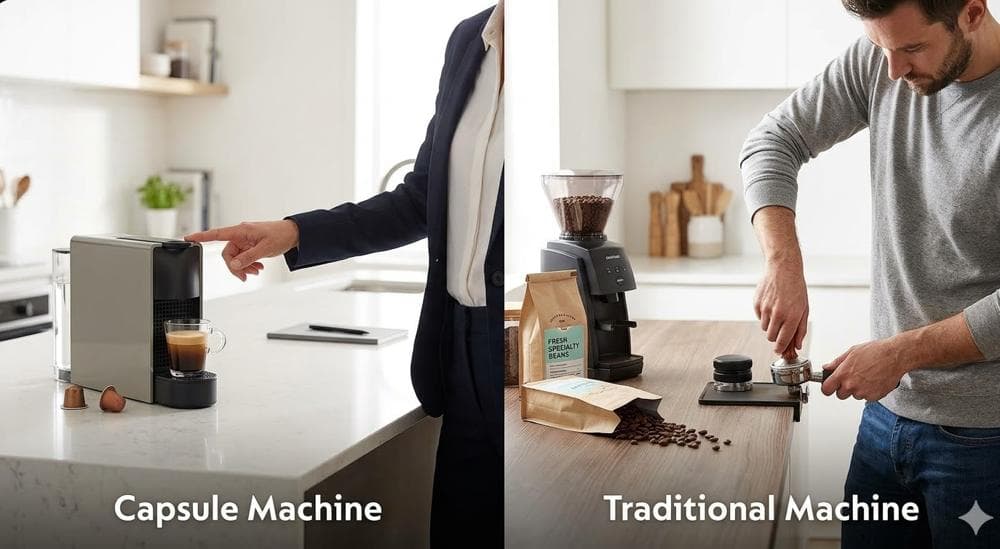
Capsule vs Traditional Espresso: The 2026 Guide
Convenience or Craft? ⏳ Discover which machine fits your morning routine. See our 2026 price-per-cup analysis and tech specs comparison. Make the right choice with Empstorm.
Read more→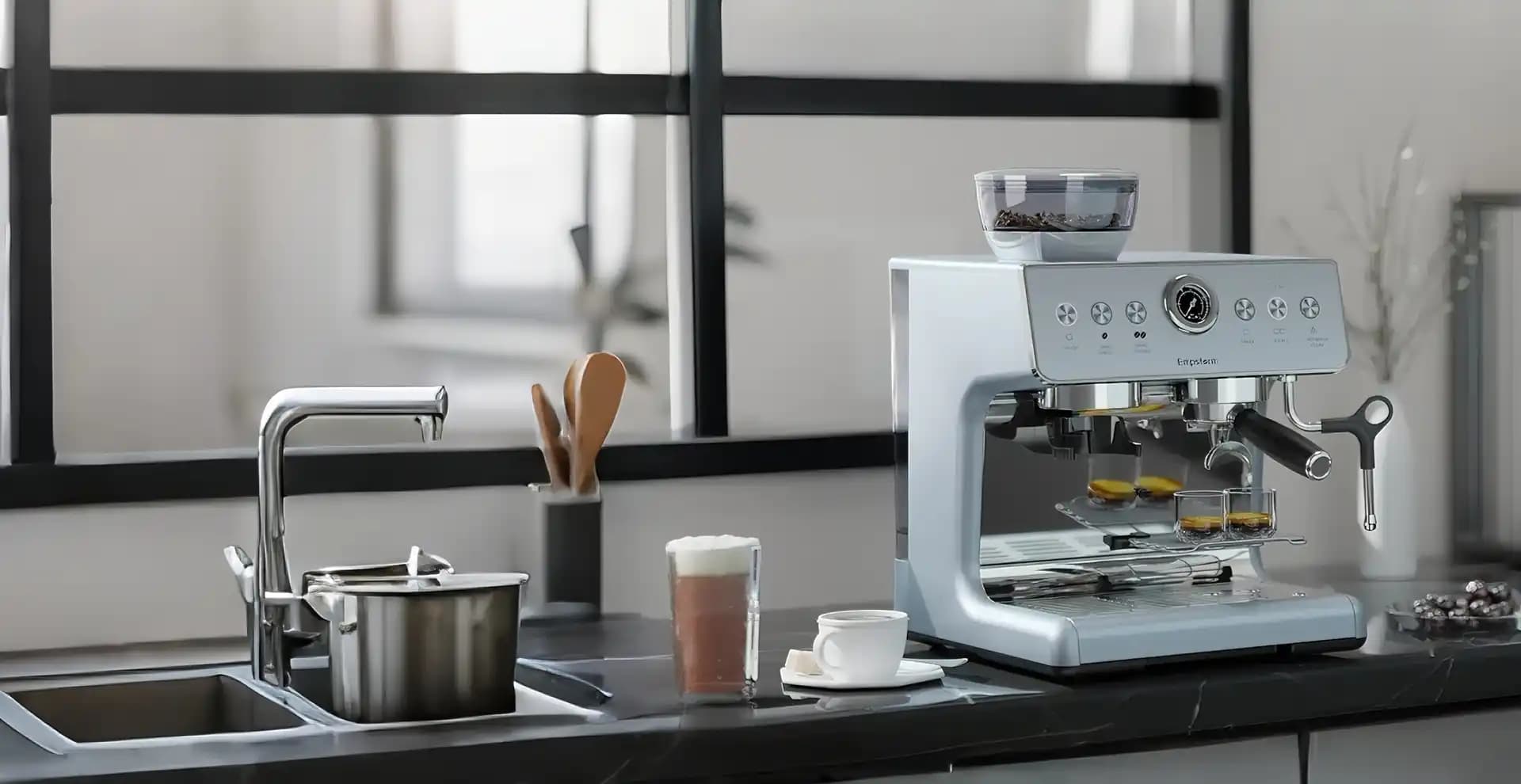
Capsule vs Bean
Compare capsule vs bean-to-cup machine architectures. We analyze PID control, rotary pumps, and extraction ROI for commercial coffee wholesalers.
Read more→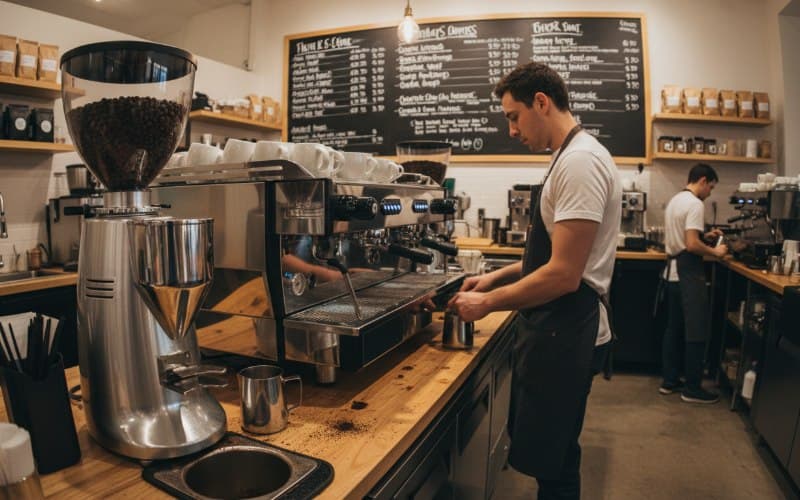
How to Choose the Right Coffee Machine for Commercial Systems
Maximize ROI and consistency. A technical guide for system integrators on selecting commercial espresso equipment with PID control and multi-boiler tech.
Read more→Empstorm · OEM / ODM
Ready to source your coffee machines?
Tell us your market and volume — our team replies within one business day.